
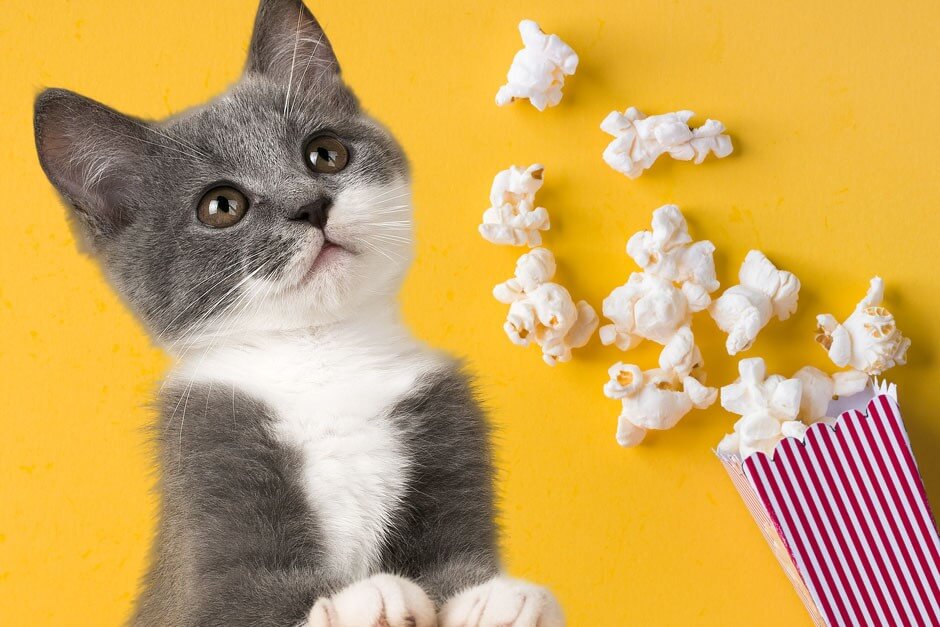
Popcorn, a beloved snack for many humans, often finds its way into our homes, movie nights, and leisure time. As a cat owner, you might wonder if your feline friend can indulge in this popular treat. Let’s explore whether popcorn is suitable for cats. Popcorn itself is not inherently toxic to cats, but it’s essential to consider various factors before sharing this snack with your pet. Plain, air-popped popcorn, without any seasoning or additives, is the safest option for cats if considered at all. However, even plain popcorn comes with its caveats.
Firstly, cats are obligate carnivores, meaning their nutritional needs primarily revolve around animal-based proteins. Popcorn lacks the essential nutrients that cats require for a balanced diet. It’s high in carbohydrates and low in proteins and fats, which are crucial for a cat’s health. Moreover, the kernels and un-popped corn can pose a choking hazard or cause dental issues if ingested by cats. Additionally, the hard texture of kernels might be difficult for cats to digest, potentially leading to gastrointestinal discomfort.

If you’re considering offering your cat popcorn, it’s crucial to remember the following:
Portion Control: If you decide to offer plain, air-popped popcorn as an occasional treat, keep the portion small to avoid potential digestive problems or choking hazards.
Safety First: Ensure that the popcorn is completely plain and free from any seasoning, butter, or additives that might be harmful to your cat.
Individual Variability: Cats have varying tolerances and sensitivities to different foods. While one cat might tolerate a small amount of plain popcorn without issues, another might experience digestive upset.
Consult a Vet: Before introducing any new food to your cat’s diet, including popcorn, it’s always best to consult your veterinarian. They can offer advice specific to your cat’s health and dietary needs.
Can cats eat popcorn with butter?
While cats may exhibit curiosity about various human foods, sharing popcorn with butter isn’t advisable for our feline companions. Butter, a common addition to popcorn, poses several risks to cats. Dairy products like butter contain lactose, and many cats are lactose intolerant. Feeding them buttery popcorn can lead to digestive issues such as stomach upset, diarrhea, or vomiting. Moreover, butter is high in fat, which isn’t a natural part of a cat’s diet. Excessive fat consumption can result in pancreatitis, a serious inflammation of the pancreas, in cats.
Additionally, the salt content in buttered popcorn is another concern. Cats are sensitive to salt, and a high sodium intake can lead to electrolyte imbalances, affecting their health adversely. In summary, popcorn with butter isn’t a suitable snack for cats due to the potential digestive problems, high-fat content, and salt content.
Can cats eat kettle popcorn?
Kettle popcorn, known for its sweet and salty flavor, raises concerns about its suitability for our feline companions. While the popcorn itself might not be inherently toxic to cats, the ingredients and preparation methods involved in kettle popcorn make it unsuitable for feline consumption. Kettle popcorn typically contains added sugars, salt, and sometimes other flavorings or coatings. These additives can be harmful to cats. Excessive salt intake can lead to electrolyte imbalances, affecting their health, while sugars are unnecessary in a cat’s diet and can cause gastrointestinal upset.
Furthermore, the hard kernels in kettle popcorn pose a potential choking hazard or may cause dental issues if ingested by cats. Additionally, some flavorings used in kettle popcorn, like artificial sweeteners or seasonings, can be toxic or cause digestive problems in cats. Due to these potential risks, it’s best to avoid offering kettle popcorn to your cat. Opt instead for treats specifically formulated for cats or stick to their regular, nutritionally balanced cat food to ensure their well-being.
Can cats eat white cheddar popcorn?
Cats are known for their curious nature, especially when it comes to human food. White cheddar popcorn might seem harmless, but when it comes to our feline friends, caution is essential. Cats can be finicky eaters, and while they may show interest in sharing your snack, it’s crucial to consider their dietary needs. White cheddar popcorn isn’t toxic to cats in small amounts, but it’s not an ideal treat for them either. The high-fat content and seasoning can lead to digestive issues like upset stomachs or even pancreatitis.
Can cats eat caramel popcorn?
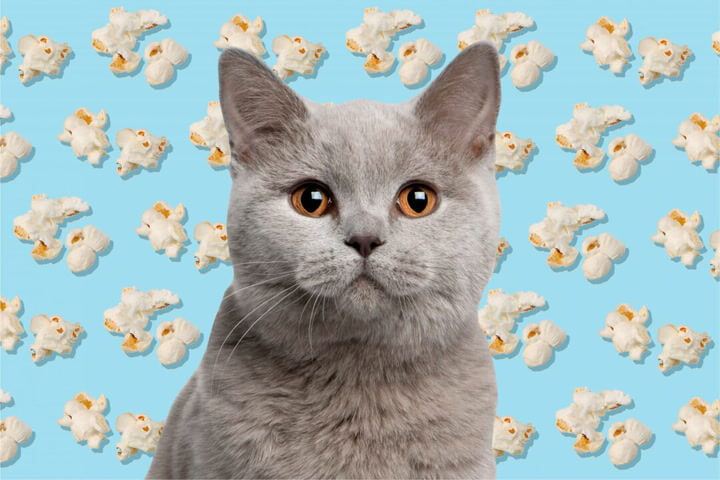
Caramel popcorn, with its sweet and crunchy allure, may catch the attention of our feline friends, but it’s best to keep this treat away from their curious paws. While a few kernels might not cause immediate harm, it’s not a safe or suitable snack for cats. The main concern with caramel popcorn, as with many human foods, lies in its ingredients and potential impact on a cat’s health. Cats lack the necessary digestive enzymes to process sugary or high-carbohydrate foods effectively. The sugar content in caramel (or peanut butter) popcorn may cause gastrointestinal upset.
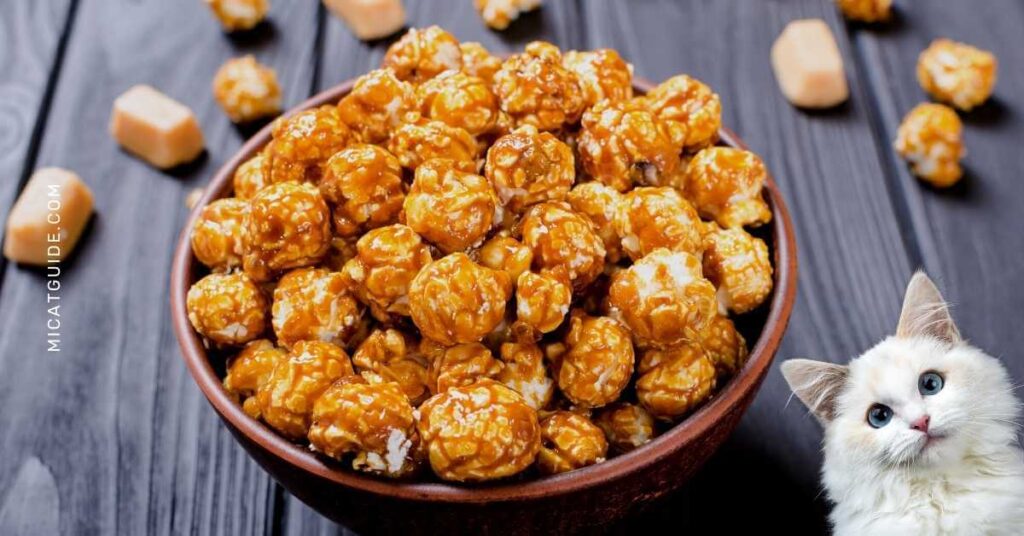
To ensure your cat’s well-being, it’s best to refrain from sharing caramel popcorn or any human food that doesn’t align with their dietary needs. Offering specially formulated cat treats or sticking to their prescribed diet guarantees their health and happiness. Always consult a veterinarian if you suspect your cat has consumed something potentially harmful.
Can cats eat popcorn with cheese?
Popcorn with cheese might seem like a harmless treat to share with your feline friend, but it’s essential to approach it with caution. While a small piece might not cause immediate harm, it’s not an ideal snack for cats. The cheese itself isn’t toxic to cats, but many cats are lactose intolerant, lacking sufficient enzymes to digest dairy products effectively. Additionally, the high-fat content in cheese can be problematic for cats.
The popcorn, if unbuttered and unseasoned, might not pose a significant threat, but it’s the accompanying cheese that raises concerns. The combination of popcorn’s hard texture and cheese’s stickiness could create a choking hazard or lead to digestive problems if consumed in larger quantities. A cat’s diet should primarily consist of protein and essential nutrients found in specially formulated cat food. Introducing human foods, especially those high in fat or potential allergens like dairy, can disrupt their nutritional balance and overall health.
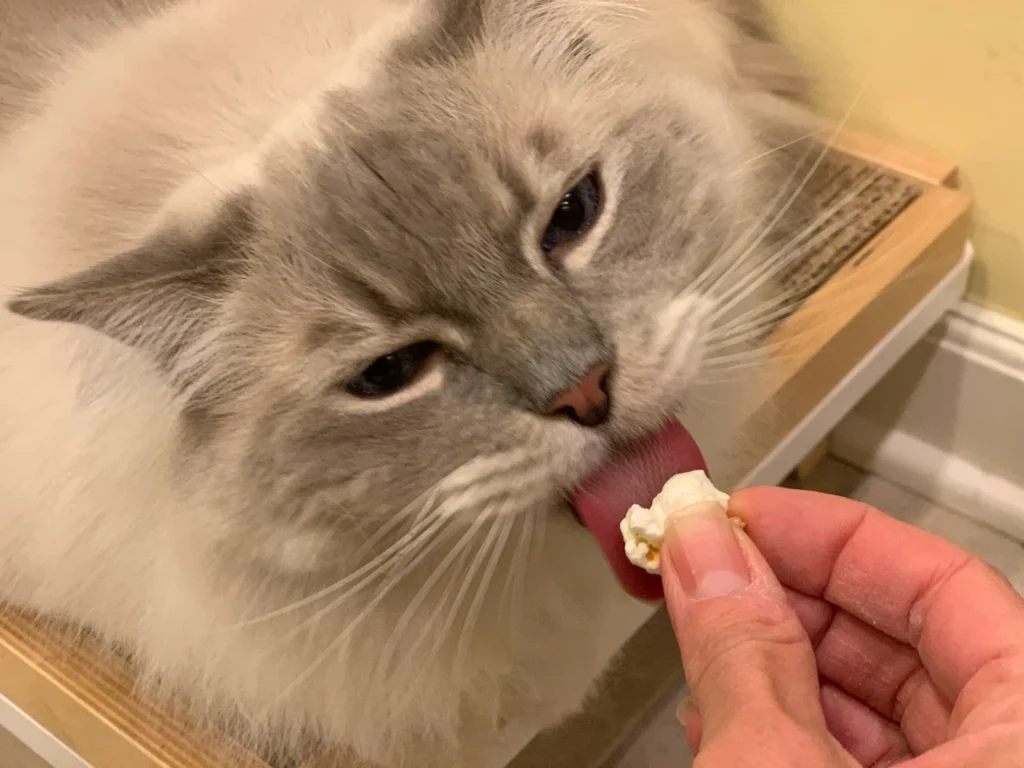
Can cats eat sweet popcorn?
Sweet popcorn, though enticing to humans, isn’t an advisable treat for our feline companions. Cats have specific dietary requirements that differ greatly from ours, and sweet popcorn doesn’t align with their nutritional needs. The main concern with sweet popcorn lies in its sugar content. Moreover, the additives and artificial flavorings in sweet popcorn can be harmful to cats.
Can cats eat salted popcorn?
Salted popcorn, while not toxic to cats in small amounts, isn’t a recommended treat for our feline companions. Cats have distinct dietary requirements, and salty snacks like popcorn can pose several risks to their health. The high salt content in salted popcorn can lead to dehydration in cats. Their small size means they’re more susceptible to the effects of excess sodium, potentially causing increased thirst and urination, electrolyte imbalances, or even more severe issues if consumed regularly or in larger quantities.
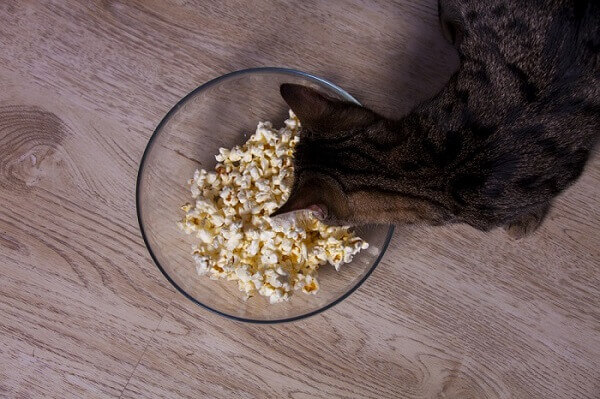
Moreover, the hard and crunchy texture of popcorn kernels presents a choking hazard for cats, which could lead to digestive discomfort or blockages in their gastrointestinal tract. Introducing salty or seasoned foods like salted popcorn can disrupt their nutritional balance and lead to health problems.
In conclusion, while plain, air-popped popcorn in small amounts might not immediately harm all cats, it’s not an ideal or necessary addition to their diet. Cats thrive on a nutritionally balanced diet designed for their species. Opting for cat-specific treats or sticking to their regular food is the safest way to ensure your feline friend stays healthy and happy. Always prioritize your cat’s health and well-being by making informed choices about their diet and consulting with a veterinarian when in doubt.